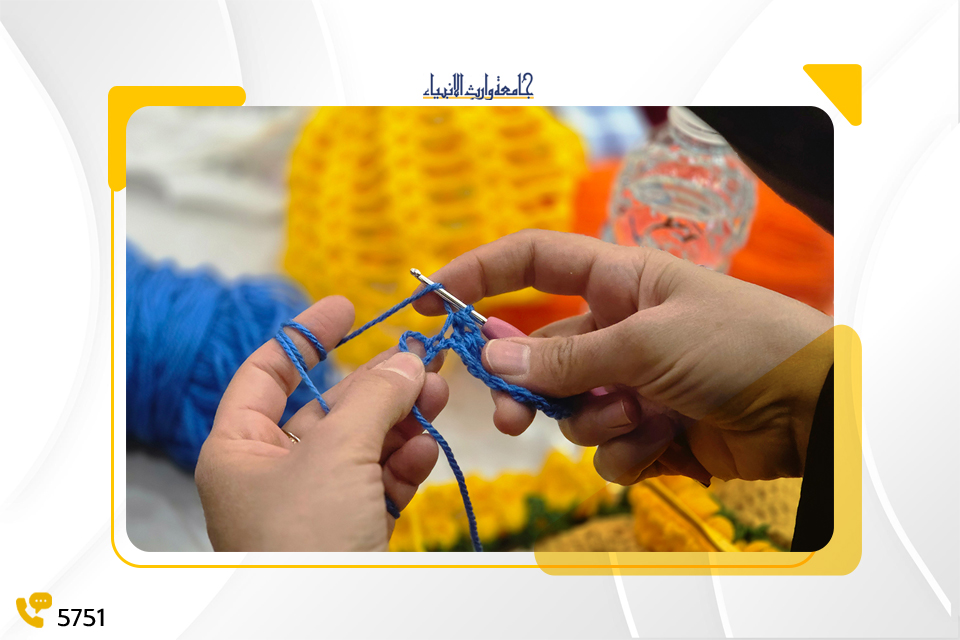
The University of Warith Al-Anbiyaa, represented by the Social Research Unit, in cooperation with the Directorate of Youth and Sports / Martyrs Youth Forum, organised a specialised training programme for female students residing in university accommodation, aimed at developing practical skills and supporting mental well-being during the examination period, in a step that enhances the quality of the learning environment.
The programme included two training workshops focused on developing life and creative skills. The first workshop introduced the basics of knitting within student accommodation, while the second focused on artificial flower-making, held at the Martyrs Youth Forum. It also included a guided tour of a permanent exhibition showcasing innovative artistic models, which contributed to fostering creativity among participants.
This programme forms part of the Social Research Unit’s strategy to develop students’ skills and discover their talents, while providing effective psychological support to help reduce exam-related stress and encourage a more balanced and positive approach to academic preparation.
The initiative aligns with the Sustainable Development Goals (SDGs)—particularly Goal 4: Quality Education, through promoting continuous learning and skills development, and Goal 3: Good Health and Well-being, by supporting mental health. It also contributes to enhancing life and professional skills, improving students’ readiness for the labour market.
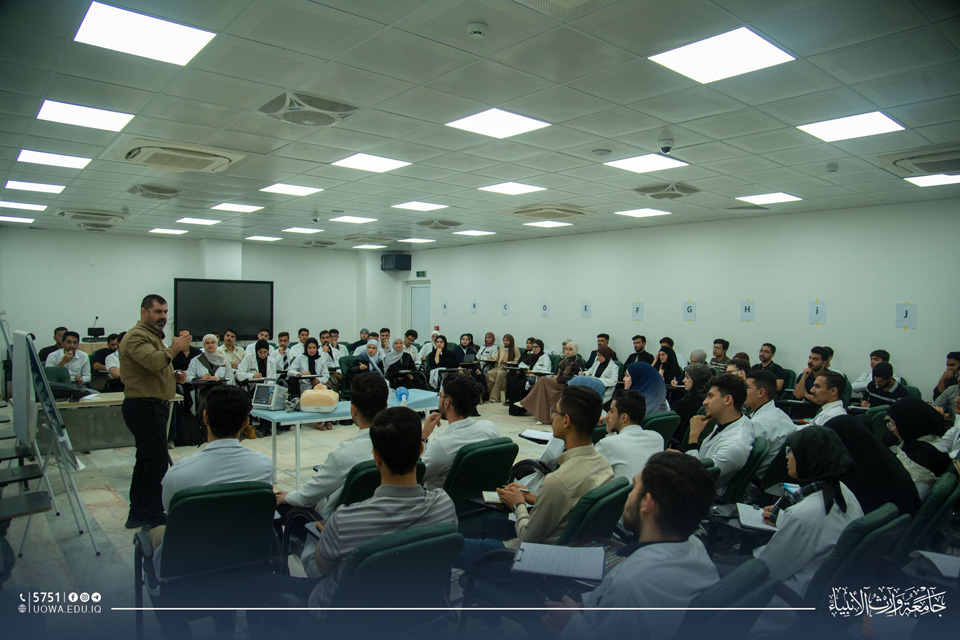
The University of Warith Al-Anbiyaa organised a training workshop for fourth-year students in the College of Medicine entitled “Emergency Centres and First Aid”, delivered by Nusrat Al-Attar, with the aim of developing students’ skills in working within emergency settings and mass casualty care.
The workshop covered procedures for managing incidents during large-scale gatherings, including mass casualty management, as well as training in measuring vital signs and applying rapid response techniques in emergency situations. This contributed to enhancing students’ readiness for fieldwork with a high level of competence.
This workshop forms part of the University’s efforts to support applied medical education and develop students’ clinical skills, in alignment with the Sustainable Development Goals (SDGs)—particularly Goal 3: Good Health and Well-being, through preparing qualified medical personnel capable of handling emergency cases. It also supports Goal 4: Quality Education by enhancing the quality of practical training.
The workshop witnessed strong student engagement, reflecting their commitment to developing their medical skills and preparing to meet the challenges of work in the healthcare sector.
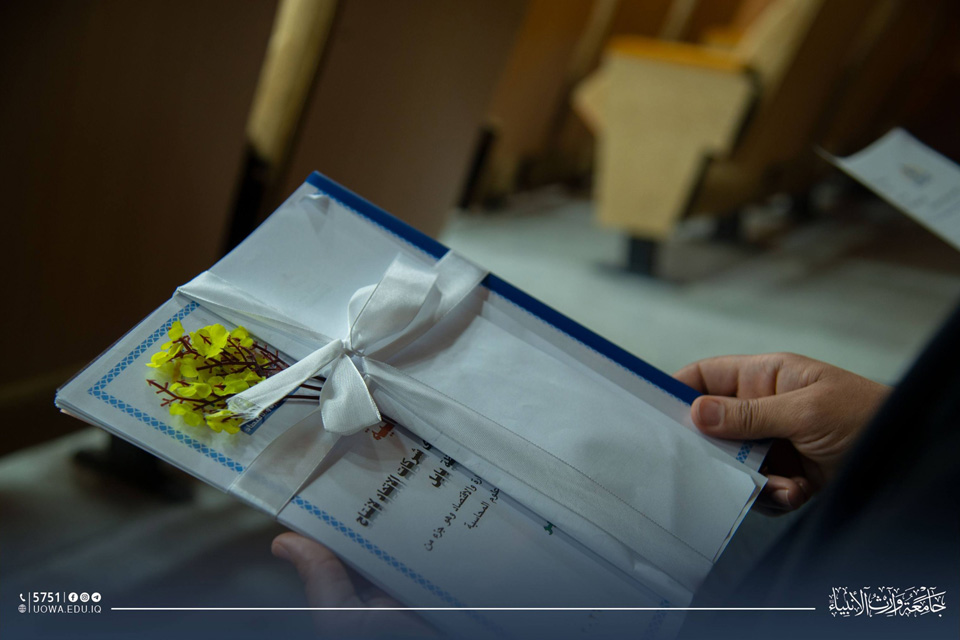
In the presence of the Vice President for Administrative Affairs Professor Dr Nowfal Al-Araji, the College of Administration and Economics held the final-year research presentations for students of the 2025–2026 academic year, in a distinguished academic setting that reflected the significant efforts of both students and supervising staff.
The presentations featured a range of research projects addressing diverse topics in the fields of management and economics, contributing to the development of students’ research and analytical skills, and supporting their academic and professional preparation for the labour market.
This activity forms part of the University’s commitment to enhancing students’ academic capabilities, in alignment with the Sustainable Development Goals (SDGs)—particularly Goal 4: Quality Education, through improving the quality of higher education. It also supports Goal 8: Decent Work and Economic Growth by developing professional and economic competencies.
The College reaffirmed its commitment to supporting academic activities that contribute to preparing qualified graduates capable of serving the community and advancing sustainable development.
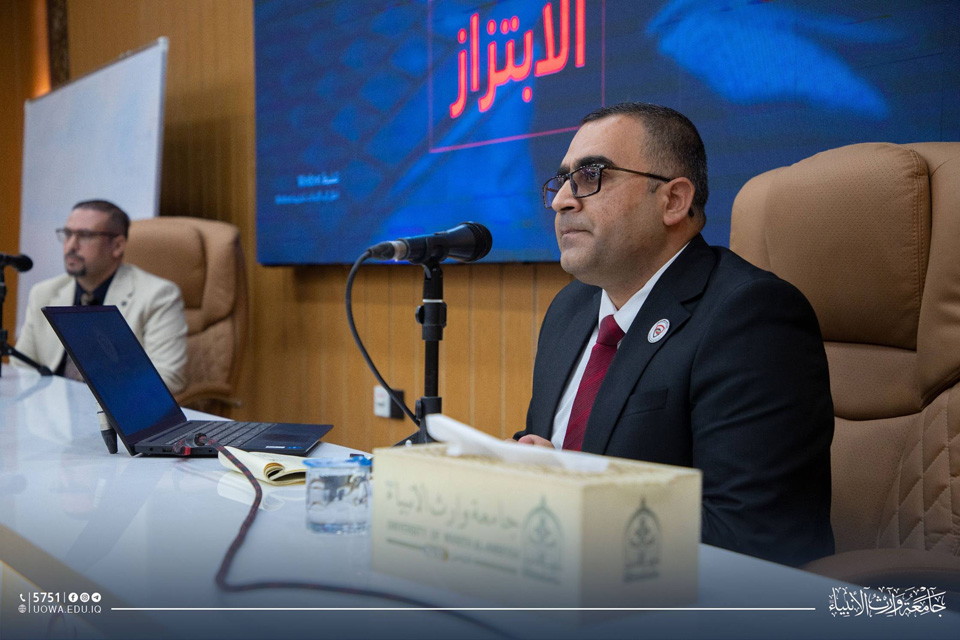
The College of Nursing at the University of Warith Al-Anbiyaa, in cooperation with the Karbala Directorate of National Security, organised an awareness seminar on cyber extortion, as part of its efforts to enhance community awareness among students and protect them from the risks of the digital environment.
The seminar addressed the main methods of cyber extortion and ways to prevent it, alongside a range of security, technical, and legal guidelines designed to enable students to respond effectively to such threats. It also introduced the relevant authorities and official hotlines responsible for handling these cases.
This activity forms part of the University’s efforts to promote a culture of digital safety and strengthen legal awareness among students, in alignment with the Sustainable Development Goals (SDGs)—particularly Goal 16: Peace, Justice and Strong Institutions, through supporting community security and legal awareness. It also supports Goal 4: Quality Education by enhancing educational and awareness initiatives.
The seminar witnessed positive engagement from students, who discussed key challenges related to the safe use of digital platforms and explored practical ways to protect themselves from cybercrime.
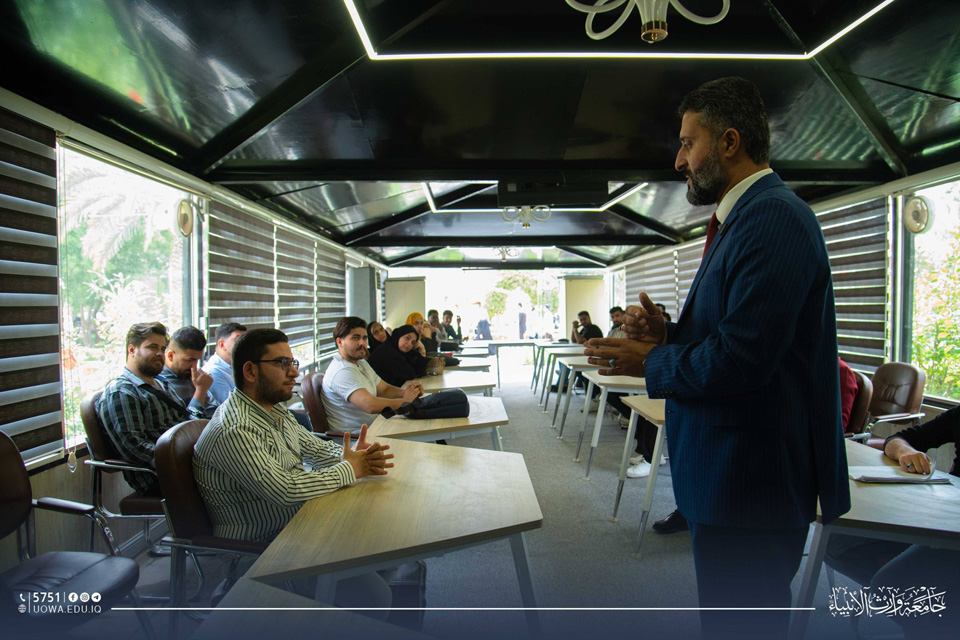
The Department of Science and Technology Parks organised an academic workshop for third-year students in the College of Media entitled “The Future of Artificial Intelligence in the Private Sector Job Market.”
The workshop was delivered by trainers Safaa Al-Saylawi and Karrar Rasool, who presented key recent developments in the field of artificial intelligence and highlighted the digital skills required to meet the demands of the labour market. Particular emphasis was placed on the importance of utilising modern technologies to enhance career opportunities.
The session witnessed strong student engagement, with discussions and questions focusing on the future of digital careers and employment prospects in the private sector, alongside an emphasis on the need to develop technical skills in line with rapid digital transformation.
This workshop forms part of the University’s efforts to prepare young professionals capable of competing in the labour market, in alignment with the Sustainable Development Goals (SDGs)—particularly Goal 4: Quality Education, through the development of modern skills. It also supports Goal 9: Industry, Innovation and Infrastructure by promoting innovation and technology.
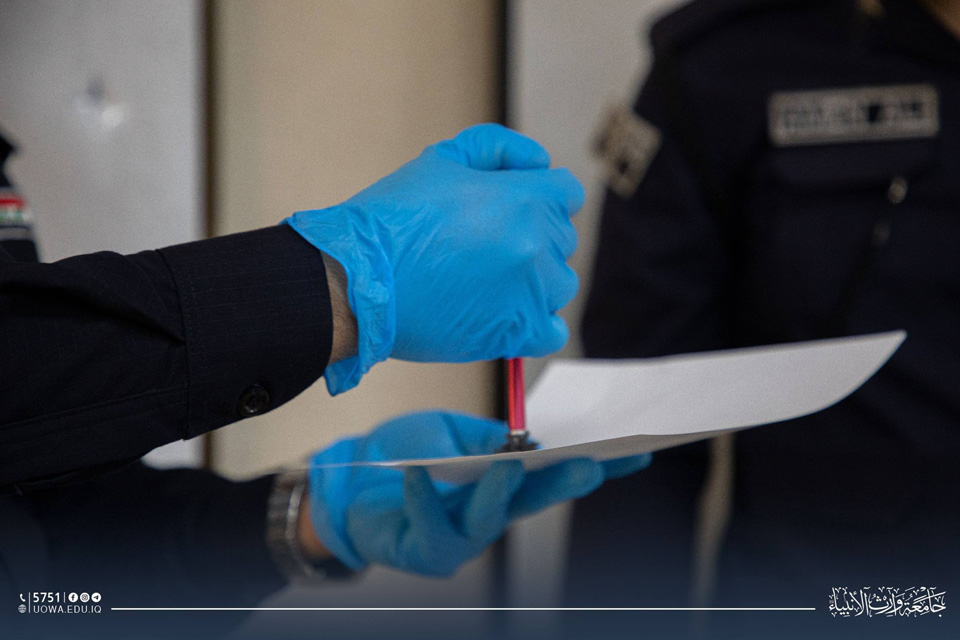
The College of Science, represented by the Department of Forensic Evidence at the University of Warith Al-Anbiyaa, organised an academic seminar entitled “Crime Scene Preservation”, delivered by Lieutenant Colonel Haider Eidan from the Karbala Police Command / Forensic Evidence Department, with the participation of students from the department.
The seminar addressed the importance of preserving the crime scene as the primary source of forensic evidence, highlighting the scientific methods used to secure incident sites and prevent contamination. It also outlined professional procedures for handling evidence in a manner that supports justice and the establishment of truth in accordance with modern forensic standards.
This activity forms part of the University’s efforts to strengthen the practical dimension of education and develop students’ specialised skills, in alignment with the Sustainable Development Goals (SDGs)—particularly Goal 4: Quality Education, through supporting applied learning and professional training. It also supports Goal 16: Peace, Justice and Strong Institutions by reinforcing the principles of justice and effective institutions.
The seminar witnessed notable engagement from students, who discussed key challenges related to preserving forensic evidence and the practical mechanisms for handling it in the field.
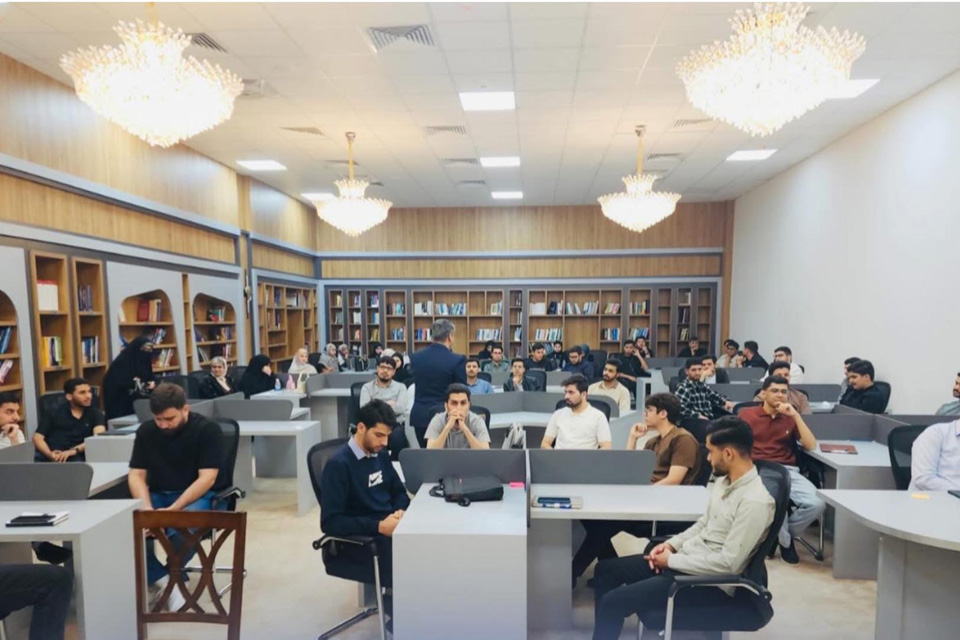
The Deanship of the College of Computer Science and Information Technology organised a training course entitled “The Art of Effective Communication”, delivered by Associate Professor Dr Mahdi Mohammed, Head of the Department of Science and Technology Parks, with the participation of students from the College.
The course addressed modern communication skills and methods of achieving positive influence in dialogue. It also focused on enhancing students’ ability to express themselves clearly and build professional relationships, contributing to the development of their academic and professional profiles and increasing their readiness for the labour market.
This course forms part of the University’s efforts to develop students’ personal and professional skills, in alignment with the Sustainable Development Goals (SDGs)—particularly Goal 4: Quality Education, through supporting lifelong learning and self-development skills. It also supports Goal 8: Decent Work and Economic Growth by enhancing employability and capacity building.
The College reaffirmed its commitment to organising training programmes that contribute to preparing students equipped with both academic competence and the communication skills required across various fields of work.
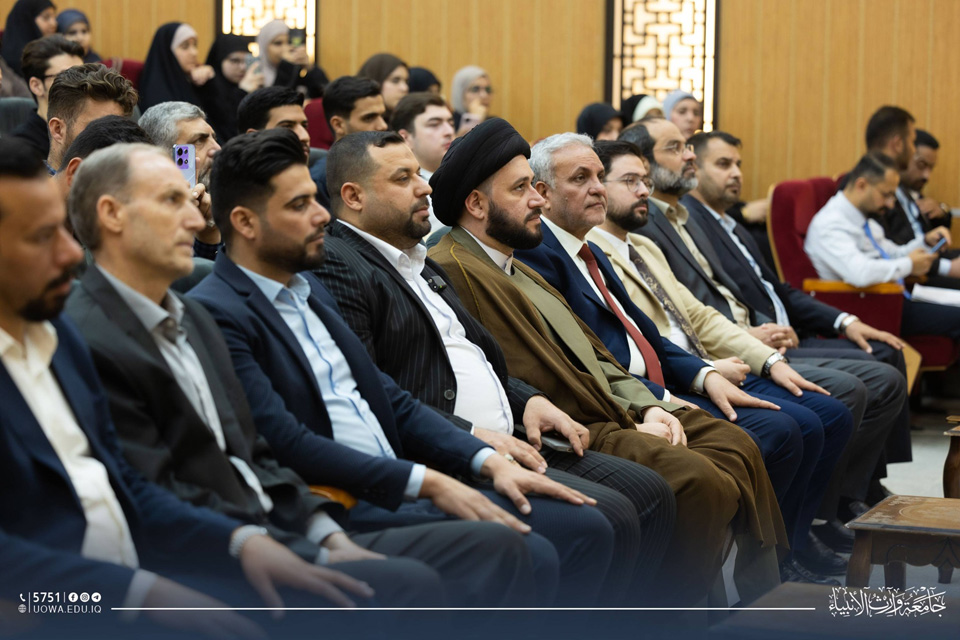
The University of Warith Al-Anbiyaa, represented by the College of Engineering and the Student Activities Department, in cooperation with the Dar Al-Qur’an Department at the Holy Hussaini Shrine, organised a Qur’anic seminar entitled “The Attributes of the Believer’s Heart: Religious and Medical Perspectives”, delivered by the Islamic scholar Dr Sadiq Al-Murouj.
The seminar examined the characteristics of the believer’s heart from both religious and medical perspectives, presenting it as the centre of faith, the foundation of human behaviour, and a source of either tranquillity or distress. It highlighted the relationship between spiritual well-being and values such as sincerity, certainty, and piety, alongside a discussion of the positive role of psychological calmness in supporting cardiovascular health and maintaining balance in accordance with contemporary medical understanding.
This activity forms part of the University’s efforts to enhance religious and health awareness among students, in alignment with the Sustainable Development Goals (SDGs)—particularly Goal 3: Good Health and Well-being, through promoting awareness of mental and physical health. It also supports Goal 4: Quality Education by encouraging knowledge-based awareness and educational engagement.
The seminar witnessed strong attendance and active engagement from students, with numerous contributions and discussions that enriched the session and deepened understanding of the relationship between faith, mental health, and physical well-being.
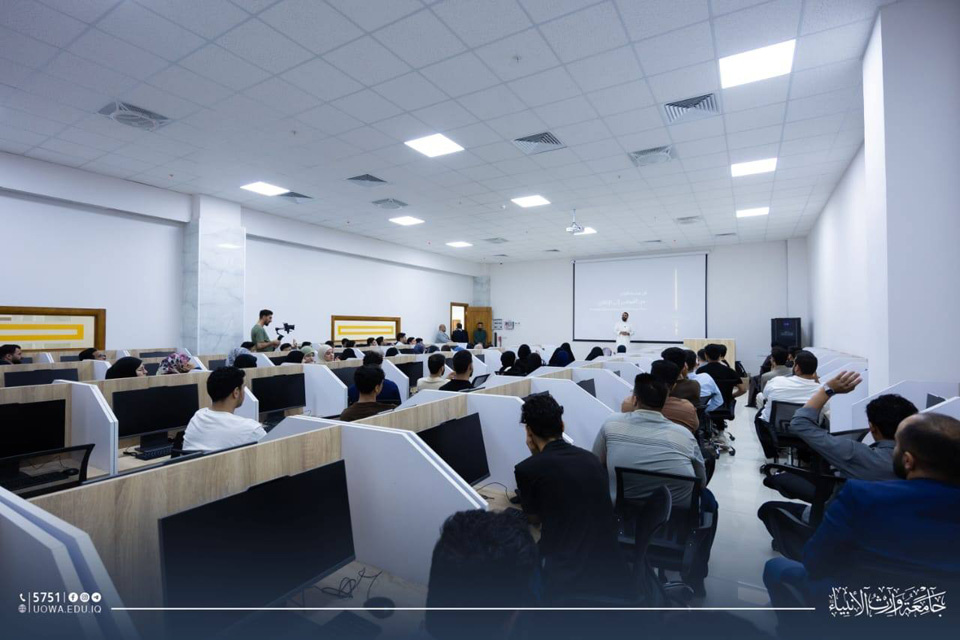
The College of Modern Technologies organised a specialised training course entitled “Prompt Engineering in Artificial Intelligence”, targeting students from the Departments of Robotics Engineering, Artificial Intelligence Engineering, and Digital Health Technologies, alongside the participation of Artificial Intelligence students from the College of Computer Science and Information Technology. The course was delivered by Mr Ahmed Al-Siddiq.
The course focused on developing applied skills in the use of artificial intelligence tools, particularly prompt engineering techniques, which are increasingly recognised as essential competencies in the labour market. This contributes to enhancing students’ technical capabilities and preparing them to keep pace with rapid digital developments.
This initiative forms part of the College’s efforts to strengthen students’ practical competencies, in alignment with the Sustainable Development Goals (SDGs)—particularly Goal 4: Quality Education, through the provision of specialised training programmes. It also supports Goal 9: Industry, Innovation and Infrastructure by promoting innovation and digital transformation.
The University reaffirmed its commitment to adopting modern educational initiatives that enhance students’ readiness and enable them to compete effectively in the labour market.
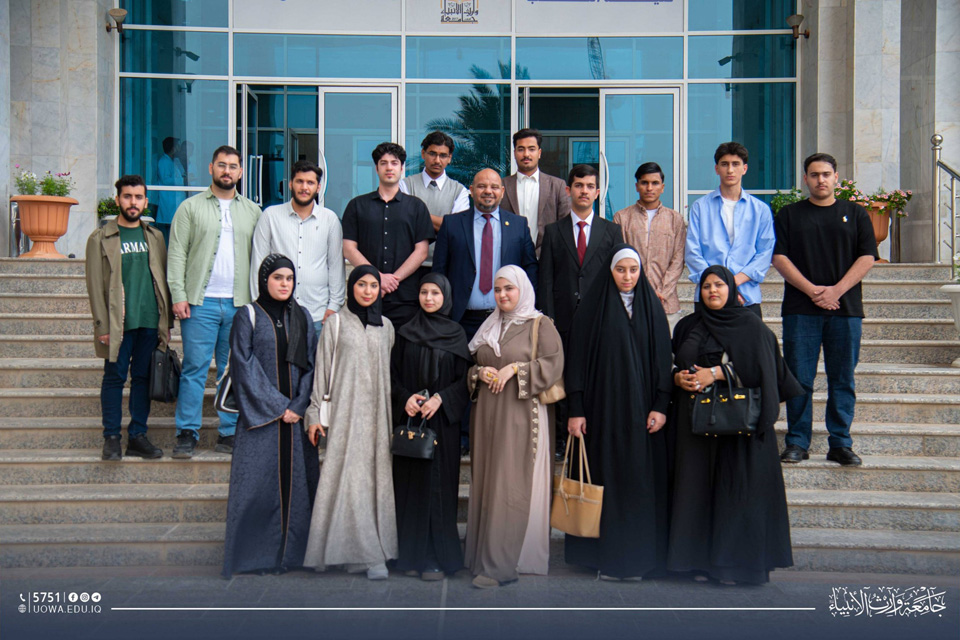
The College of Dentistry at the University of Warith Al-Anbiyaa organised a scientific visit for its students to the National Centre for Medical Competency Assessment and the laboratories of the College of Medicine, with the aim of strengthening the practical component of their studies and providing insight into the latest technologies used in the assessment of medical skills.
During the visit, students were introduced to the procedures of modern clinical examinations, as well as the equipment and laboratory facilities used in training and evaluation, contributing to the development of their academic and practical skills and enhancing their professional readiness in the medical field.
This visit forms part of the University’s commitment to promoting applied education and linking theoretical knowledge with practical experience, in alignment with the Sustainable Development Goals (SDGs)—particularly Goal 4: Quality Education, through providing an advanced learning environment. It also supports Goal 3: Good Health and Well-being by contributing to the preparation of qualified healthcare professionals.
The College reaffirmed its commitment to organising scientific activities that contribute to the development of students’ skills and keep pace with the latest medical and technological advancements.
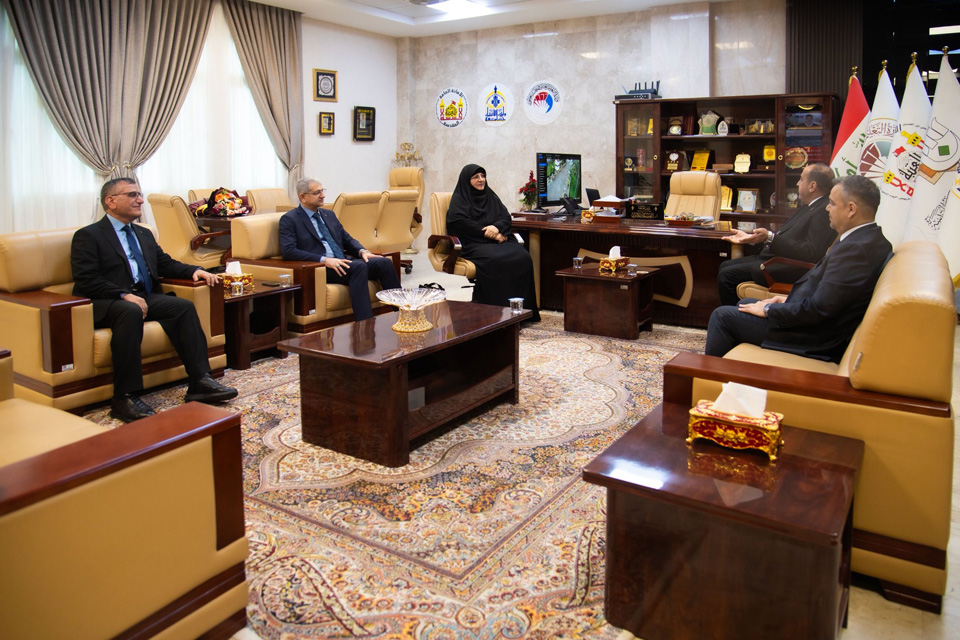
The President of the University of Warith Al-Anbiyaa, Professor Dr Ibrahim Al-Hayyawi, received the President of Al-Zahraa University for Women, Professor Dr Zainab Al-Sultani, as part of efforts to strengthen academic relations between the two institutions.
The meeting addressed ways to develop scientific and academic cooperation, as well as the exchange of expertise between both sides, in a manner that contributes to enhancing the quality of education and achieving shared objectives in supporting the academic mission.
This meeting forms part of the universities’ broader orientation towards strengthening academic partnerships and integrating expertise, in alignment with the Sustainable Development Goals (SDGs)—particularly Goal 4: Quality Education, through improving the quality of higher education. It also supports Goal 17: Partnerships for the Goals by promoting effective institutional collaboration.
Both sides emphasised the importance of continued coordination and the activation of academic agreements in ways that contribute to advancing academic development and serving the wider community.
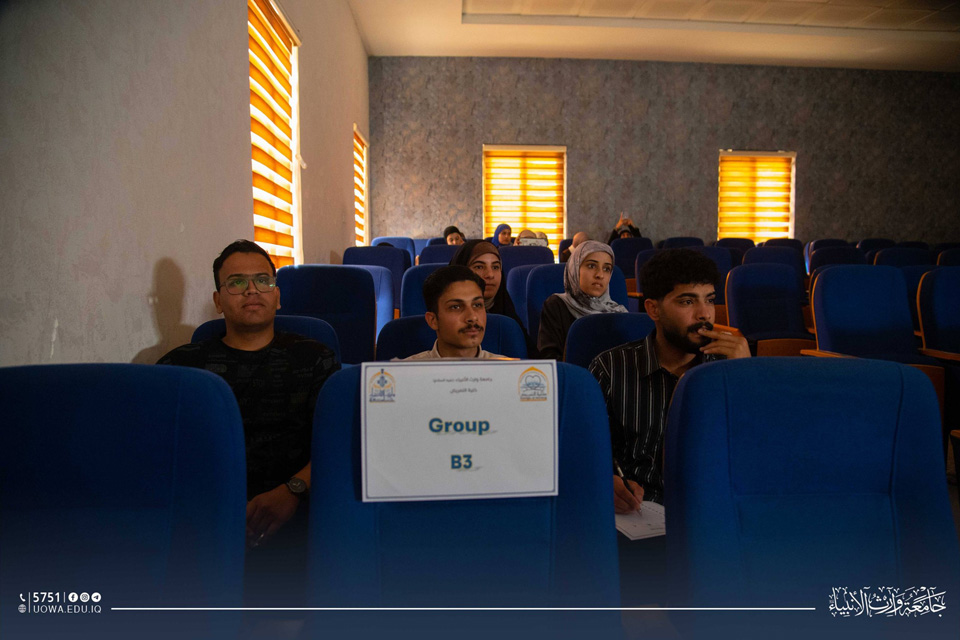
The College of Nursing organised a comprehensive Clinical Skills Assessment Competition, with the participation of students from all academic levels. The event was held in a competitive academic environment aimed at enhancing students’ practical competence.
The academic committee supervised the development of realistic simulation scenarios, through which students were evaluated according to standards of clinical accuracy, response time, and professional ethics in patient care. This reflected their level of preparedness for practice in healthcare settings.
This activity forms part of the University’s efforts to develop students’ applied skills and improve the quality of medical education, in alignment with the Sustainable Development Goals (SDGs)—particularly Goal 3: Good Health and Well-being, through preparing competent healthcare professionals, and Goal 4: Quality Education, by supporting practice-based learning.
The competition witnessed strong student engagement, reflecting a spirit of academic competitiveness and a clear commitment to developing their professional skills in accordance with the highest standards.
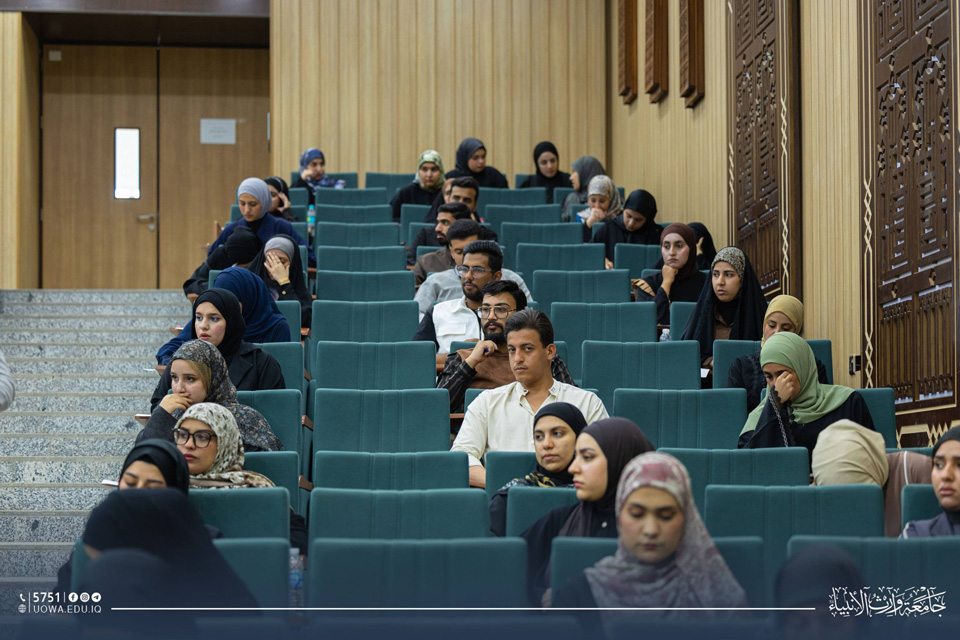
In cooperation with the University of Karbala, and under the supervision of the Iraqi Ministry of Higher Education and Scientific Research, the College of Science at the University of Warith Al-Anbiyaa conducted a joint examination with its counterpart. This initiative aims to strengthen academic standards and promote the exchange of academic expertise between educational institutions.
The examination process was closely monitored, with all logistical and technical requirements provided to ensure smooth implementation. A well-organised examination environment was maintained in accordance with established academic standards.
This collaboration forms part of ongoing efforts to support the quality of education and enhance integration among Iraqi universities, in alignment with the Sustainable Development Goals (SDGs)—particularly Goal 4: Quality Education, through improving the level of academic assessment. It also supports Goal 17: Partnerships for the Goals by expanding opportunities for academic collaboration.
The University reaffirmed its commitment to continuing joint academic initiatives that contribute to the development of the educational process and the achievement of institutional excellence.
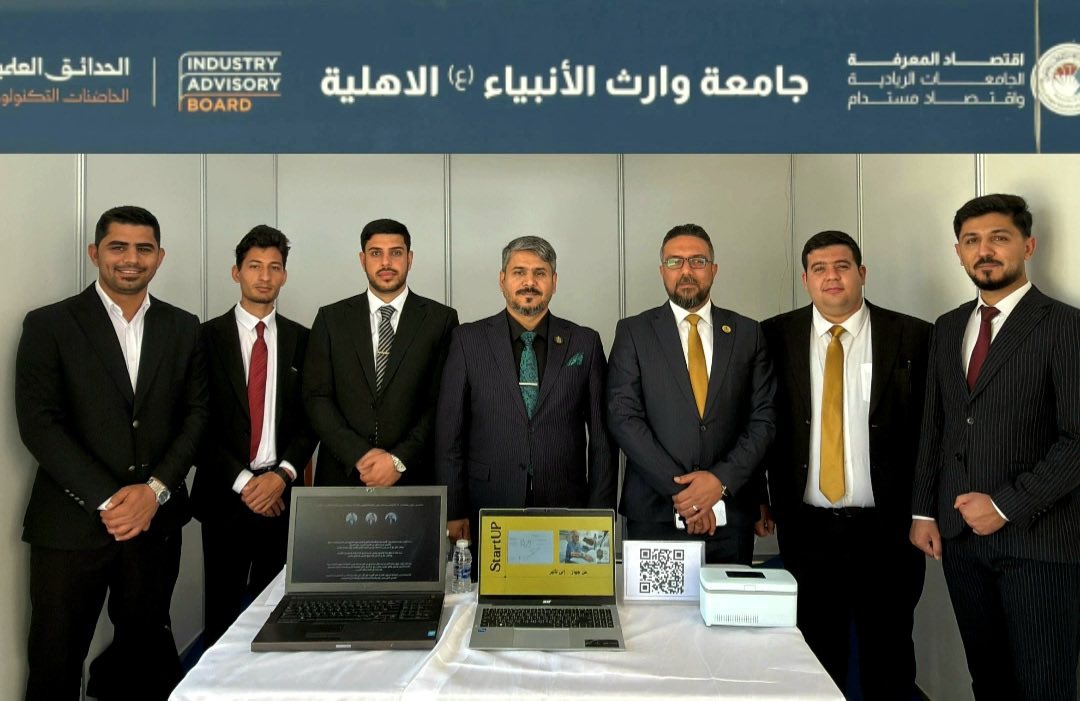
The University of Warith Al-Anbiyaa, represented by the Department of Science and Technology Parks, participated in the Knowledge Economy Conference organised by the Iraqi Ministry of Higher Education and Scientific Research, with wide participation from Iraqi universities.
During the conference, the University was selected among a distinguished group of universities to present success stories and patents, reaffirming its research excellence and active role in supporting the knowledge economy and promoting innovation.
As part of its participation, the University presented innovative models and entrepreneurial projects that reflected its ability to connect educational outcomes with the needs of the labour market. It also showcased student projects that had developed into ideas with economic and social impact, reinforcing its commitment to building an academic environment that encourages creativity.
This participation forms part of efforts to support innovation and a knowledge-based economy, in alignment with the Sustainable Development Goals (SDGs)—particularly Goal 9: Industry, Innovation and Infrastructure, through strengthening scientific research and technological development. It also supports Goal 8: Decent Work and Economic Growth by promoting employment opportunities and sustainable economic progress.
Through this participation, the University reaffirms its continued commitment to developing the research and innovative capacities of its students and contributing effectively to the achievement of sustainable development.
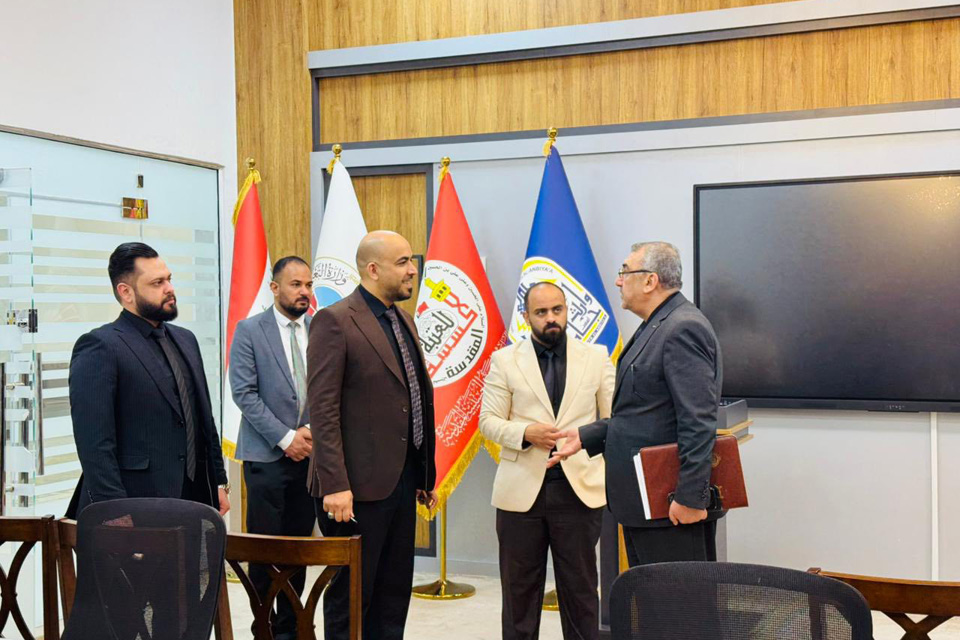
In alignment with the vision of the Holy Imam Hussain Shrine in supporting digital transformation, and under its direct patronage, the College of Computer Science and Information Technology at the University of Warith Al-Anbiyaa, in cooperation with the Arab Union for Digital Empowerment, launched advanced programmes in the field of digital empowerment. These initiatives aim to develop students’ technical skills and enhance their readiness for the labour market.
The College also received a visit from Dr Khalil Al-Tayyar, Adviser for External Relations and Public Affairs at the Holy Hussaini Shrine, to discuss mechanisms for implementing the provisions of the joint agreement. He was received by the Dean of the College, Associate Professor Dr Haider Al-Ghanmi, where emphasis was placed on expanding opportunities for practical training and keeping pace with the latest technological developments in the digital field.
This initiative forms part of the University’s commitment to preparing qualified graduates equipped with advanced digital skills, in alignment with the Sustainable Development Goals (SDGs)—particularly Goal 4: Quality Education, through the development of modern educational programmes. It also supports Goal 9: Industry, Innovation and Infrastructure by promoting innovation and technological transformation.
This step reaffirms the University’s commitment to fostering an advanced educational environment that responds to the demands of the digital age and enables students to compete effectively in the labour market.
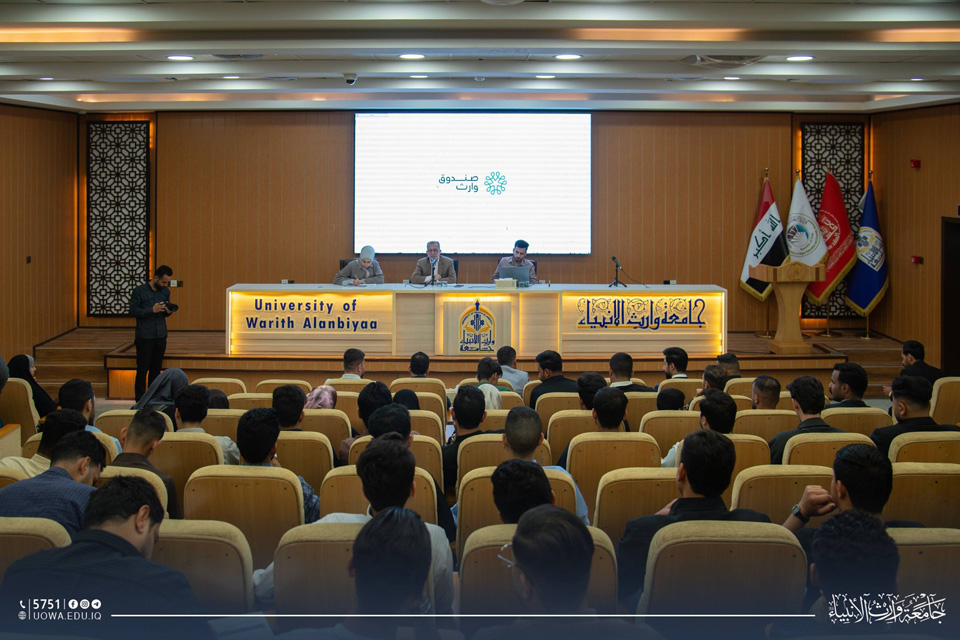
The University of Warith Al-Anbiyaa, in cooperation with the Warith Fund, affiliated with the Warith International Foundation for Cancer Treatment, organised an introductory workshop outlining the Fund’s operating mechanism and the services it provides in offering free medical treatment to children with cancer up to the age of 15 years.
The workshop highlighted the medical and humanitarian efforts devoted to supporting affected cases, with particular emphasis on the importance of community solidarity in caring for children with cancer and reducing the burden on their families. It also introduced the procedures through which beneficiaries may access the Fund’s services.
This event forms part of efforts to strengthen humanitarian and health awareness within the university community, in alignment with the Sustainable Development Goals (SDGs)—particularly Goal 3: Good Health and Well-being, through supporting healthcare for the most vulnerable groups. It also supports Goal 17: Partnerships for the Goals by reinforcing the values of partnership and humanitarian cooperation. The workshop witnessed positive engagement from attendees, reflecting growing interest in health and charitable initiatives that contribute to supporting children affected by cancer and improving their quality of life.
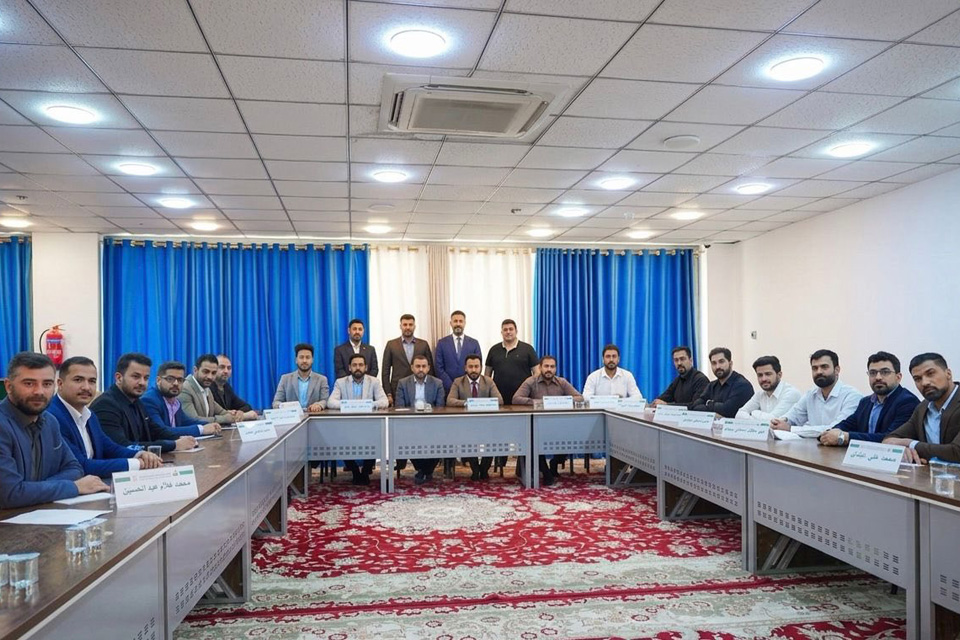
The University of Warith Al-Anbiyaa in cooperation with the Department of Youth Development and Social Rehabilitation at the Imam Hussain Holy Shrine launched its leadership programme under the slogan “Modern Leadership and Creating Influence”, in a step aimed at developing the capabilities of young people and strengthening their role in institutional work.
The first phase of the programme included a series of interactive workshops delivered by Assistant Lecturer Safaa Al-Saylawi and trainer Ali Zuhair Ahmed from the Department of Gardens and Technology Sciences. The sessions focused on developing skills in effective leadership, decision-making, and creating positive influence within various professional environments.
This programme forms part of broader efforts to support and empower young people while enhancing their leadership capacities, in alignment with the Sustainable Development Goals (SDGs)—particularly Goal 4: Quality Education, through the provision of high-quality training opportunities. It also supports Goal 16: Peace, Justice and Strong Institutions by contributing to the development of effective institutions and promising leadership competencies.
The programme reflects the organisers’ commitment to investing in youth potential and preparing young people to make meaningful contributions to community development and the creation of positive impact.
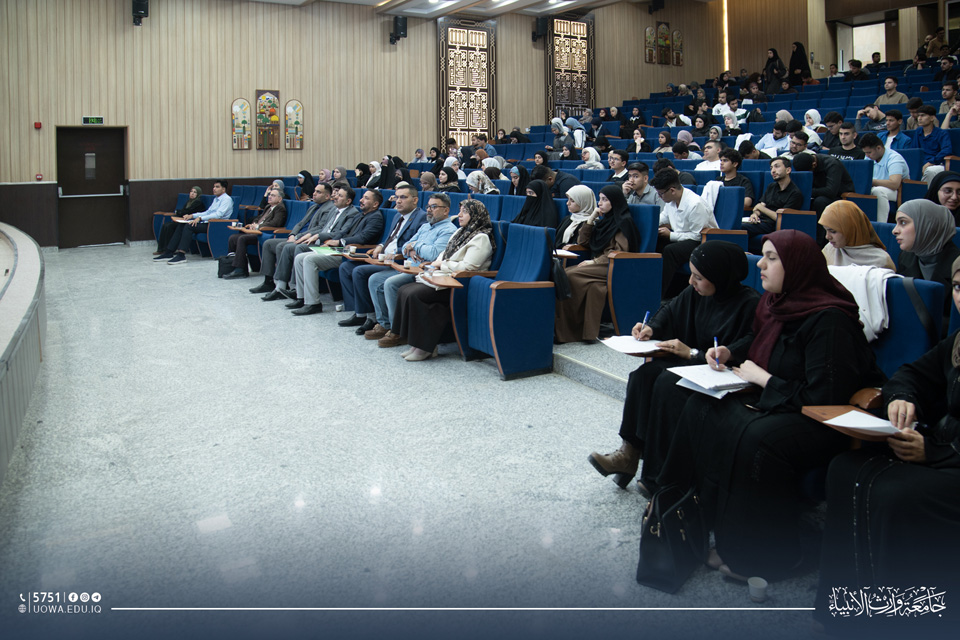
As part of its efforts to strengthen academic awareness and promote the concept of shared responsibility, the College of Medicine at the University of Warith Al-Anbiyaa organised an academic seminar for its students entitled: “The Obligations of Academic Staff and Students Amid Current Challenges: A Legal, Ethical, and Media Perspective.”
The seminar highlighted the importance of adherence to university values and institutional regulations, and their role in building a rigorous educational environment founded on discipline and awareness. It also emphasised the importance of fostering a culture of cooperation between academic staff and students, with positive implications for the quality of the educational process.
This event forms part of the University’s commitment to promoting the principles of responsible education and enhancing academic conduct, in alignment with the Sustainable Development Goals (SDGs)—particularly Goal 4: Quality Education, through supporting a learning environment based on quality and discipline. It also supports Goal 16: Peace, Justice and Strong Institutions by reinforcing institutional commitment.
The seminar witnessed notable engagement from students, during which a range of views and questions were raised, enriching the discussion and deepening understanding of the nature of shared responsibilities within the university environment.
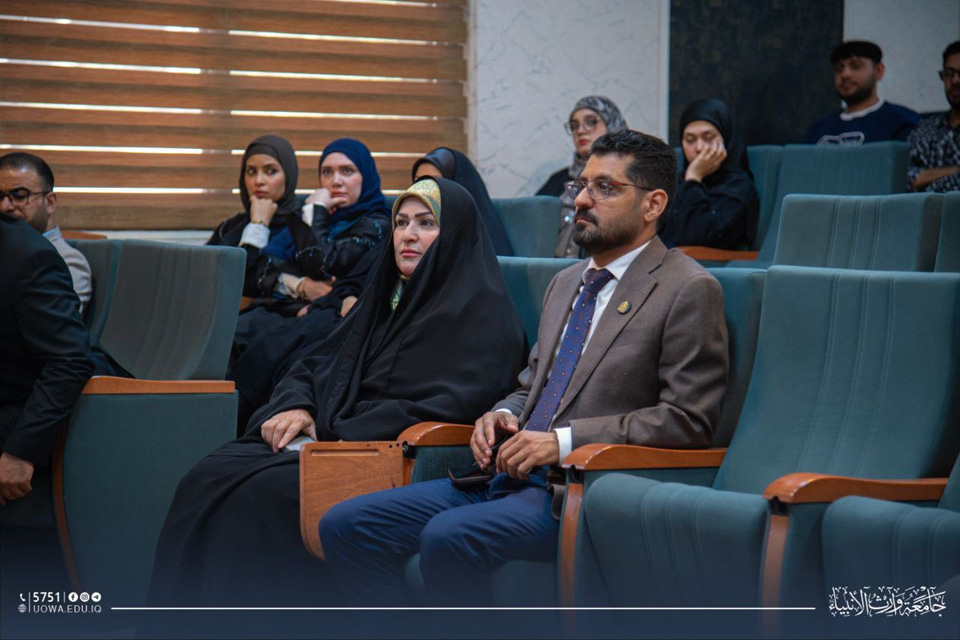
The University of Warith Al-Anbiyaa, represented by the College of Media, in cooperation with the Karbala Centre for Studies and Research, organised an academic seminar entitled “The Role of Conscious Leadership Groups in State Governance According to the Perspectives of the Religious Authority.”
The seminar examined the importance of the role played by aware leadership groups in building state institutions and promoting the principles of good governance. It also highlighted the importance of strengthening institutional awareness based on responsibility and competence, thereby contributing to social stability and supporting pathways of sustainable development.
This seminar forms part of the University’s efforts to promote purposeful academic thought and connect theoretical knowledge with practical application, in alignment with the Sustainable Development Goals (SDGs)—particularly Goal 16: Peace, Justice and Strong Institutions, through supporting the development of effective institutions characterised by efficiency and transparency. It also supports Goal 4: Quality Education by reinforcing the principles of enlightened education.
The seminar witnessed notable attendance and engagement from academic staff and students, with constructive scholarly discussions that contributed to a deeper understanding of the role of leadership groups in state governance and the achievement of sustainable development.
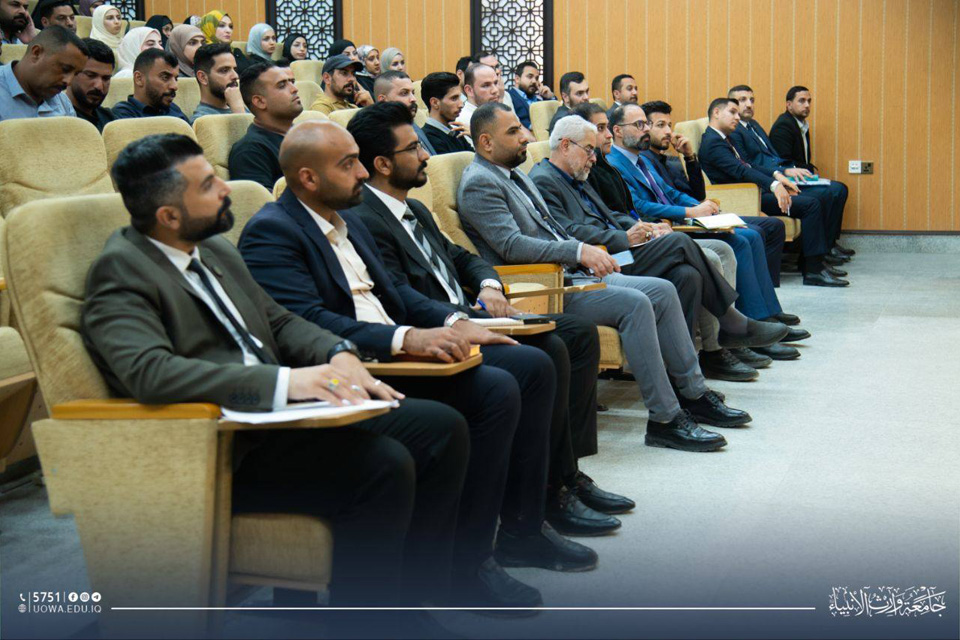
The Presidency of the University of Warith Al-Anbiyaa held a meeting with administrative staff from the University’s colleges and departments as part of its commitment to improving institutional performance, delivering the highest standard of services to students, and expediting administrative procedures.
The meeting was chaired by the Administrative Assistant, Professor Dr Nowfal Al-Araji, in the presence of the Director of the Department of Administrative and Financial Affairs, Dr Abdullah Saqr. Discussions focused on the main challenges affecting administrative work and the means of addressing them, in addition to reviewing a number of proposals submitted by employees to help remove obstacles and improve the working environment.
This meeting forms part of the University’s broader efforts to strengthen administrative efficiency and raise the quality of services provided, in alignment with the Sustainable Development Goals (SDGs)—particularly Goal 16: Peace, Justice and Strong Institutions, through building effective institutions characterised by transparency and responsiveness. It also supports Goal 4: Quality Education by enhancing both the educational and administrative environment.
The University Presidency reaffirmed its commitment to continuing initiatives that strengthen institutional work and promote effective communication between different departments, in a manner that fulfils students’ aspirations and elevates the overall standard of performance.
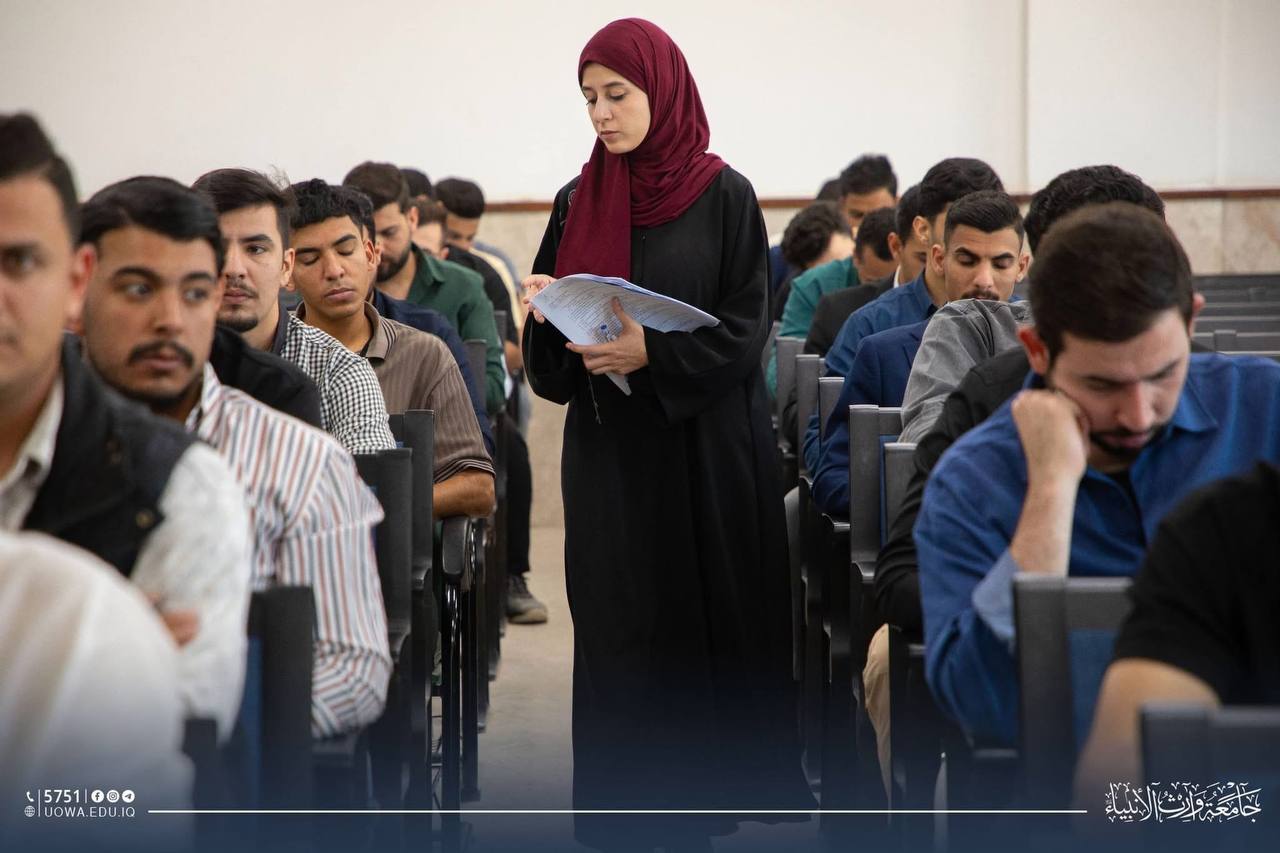
In a step that reflects the commitment to advancing higher education and strengthening academic integration, the College of Administration and Economics at the University of Warith Al-Anbiyaa organised a joint examination for second- and third-year students in the Department of Oil and Gas Economics, in cooperation with the College of Industrial Administration for Oil and Gas at the University of Basra. The examination was conducted under the direct supervision of the College Deanship and with the support of the Ministry of Higher Education and Scientific Research.
This examination forms part of the implementation of the scientific cooperation agreement between the two universities, which aims to unify academic standards across corresponding departments and raise the quality of education in petroleum-related disciplines. It also seeks to align academic outcomes with the needs of the labour market and the rapid developments taking place in the energy sector.
This initiative is consistent with the Sustainable Development Goals (SDGs), particularly Goal 4: Quality Education, through improving educational outcomes and strengthening academic competence. It also supports Goal 8: Decent Work and Economic Growth by preparing specialised graduates capable of contributing to the development of the oil industry and achieving sustainable economic growth.
This academic collaboration demonstrates the commitment of Iraqi educational institutions to adopting best scientific practices and developing their programmes in ways that enhance the competitiveness of graduates both locally and internationally, while keeping pace with transformations in the oil and gas sector.
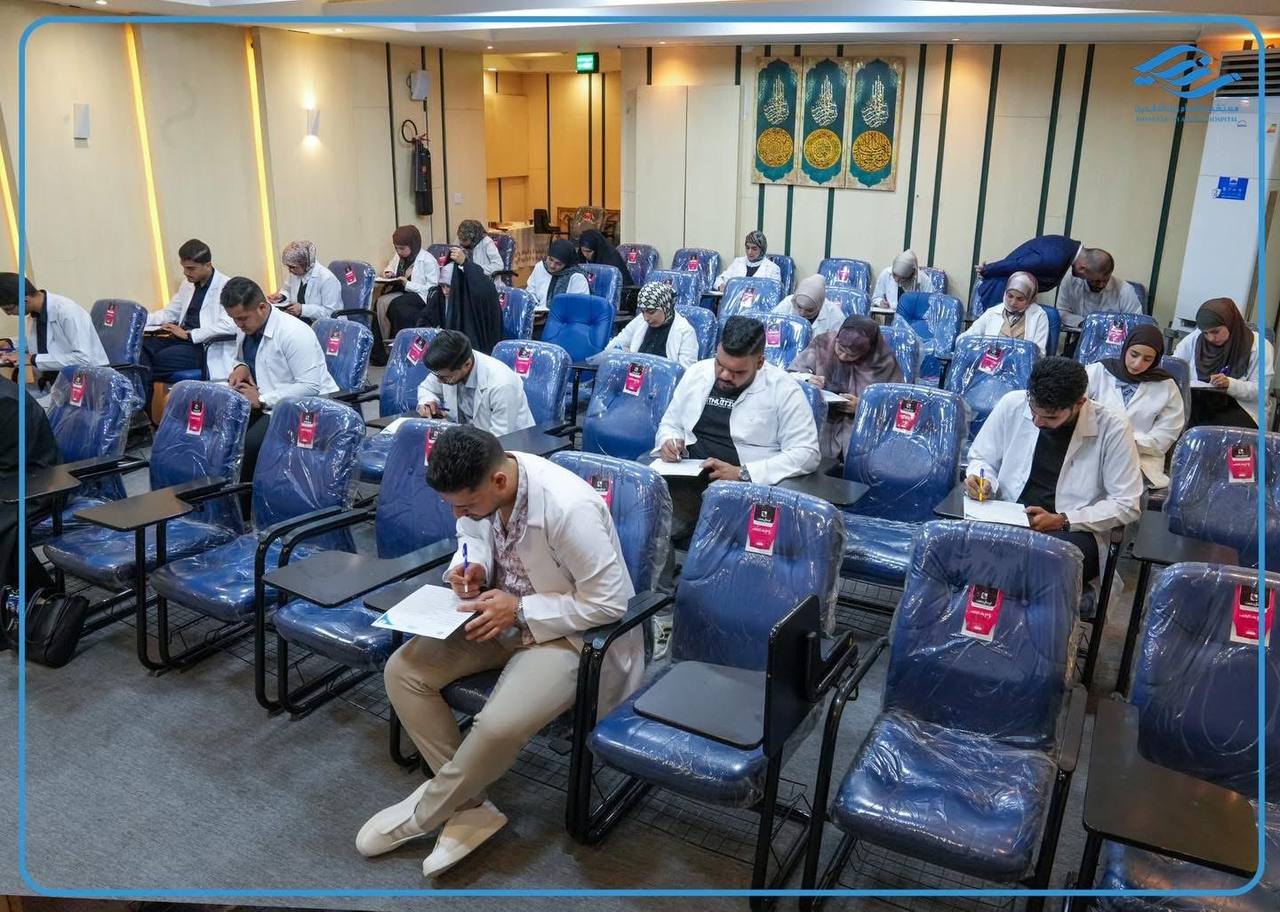
In a step reflecting ongoing efforts to advance applied medical education and strengthen partnership between academic and healthcare institutions, Imam Zain Al-Abidin Hospital welcomed third-year students from the Department of Medical Physics in the College of Science at the University of Warith Al-Anbiyaa as part of an advanced practical training programme involving more than 400 students.
This programme forms part of the initiatives led by the General Supervisor, Dr Sabah Al-Moussawi, aimed at transforming the hospital into a fully integrated teaching institution that connects theoretical knowledge with clinical practice.
The training included practical applications across several vital departments, most notably diagnostic radiology, ultrasound, computed tomography (CT), and magnetic resonance imaging (MRI). Students were given the opportunity to work with the latest internationally recognised medical equipment, helping to enhance their professional competence.
The hospital also implemented a precise assessment mechanism to measure student performance throughout the training period, in accordance with university curriculum requirements. The programme concluded with a practical examination to evaluate the extent to which students had acquired the required skills and field experience.
This collaboration reaffirms the hospital’s commitment to supporting the academic sector and contributing to the preparation of qualified medical professionals, in alignment with the Sustainable Development Goals (SDGs)—particularly Goal 3: Good Health and Well-being and Goal 4: Quality Education—through improving the quality of medical training and developing students’ applied skills.
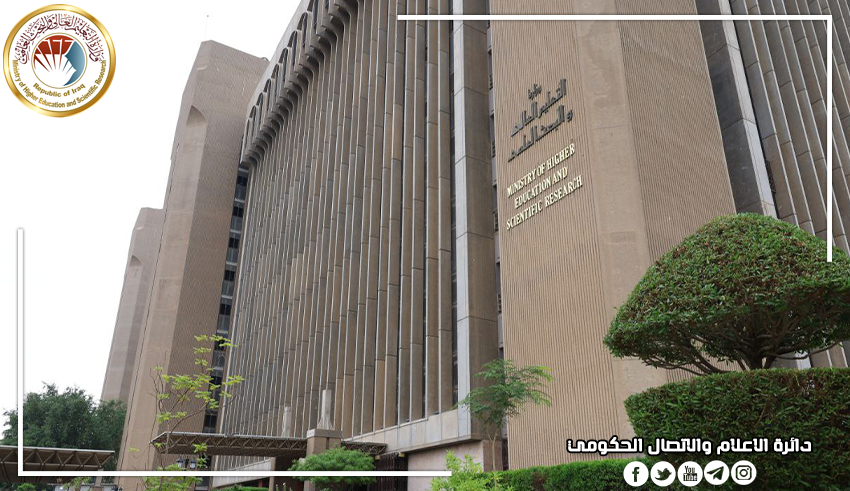
The Ministry of Higher Education and Scientific Research has announced the availability of scholarships offered by Christ University (Lavasa Campus, Pune, India) and Sobhit Institute of Engineering & Technology for the 2026/2027 academic year, exclusively for non-employed applicants.
The Department of Scholarships and Cultural Relations clarified that these opportunities are available for both undergraduate and postgraduate studies. The application deadline for Christ University (Lavasa Campus, Pune, India) is 30 April 2026, while the deadline for Sobhit Institute of Engineering & Technology is 2 August 2026.
For further details, please visit the official website of the Ministry.
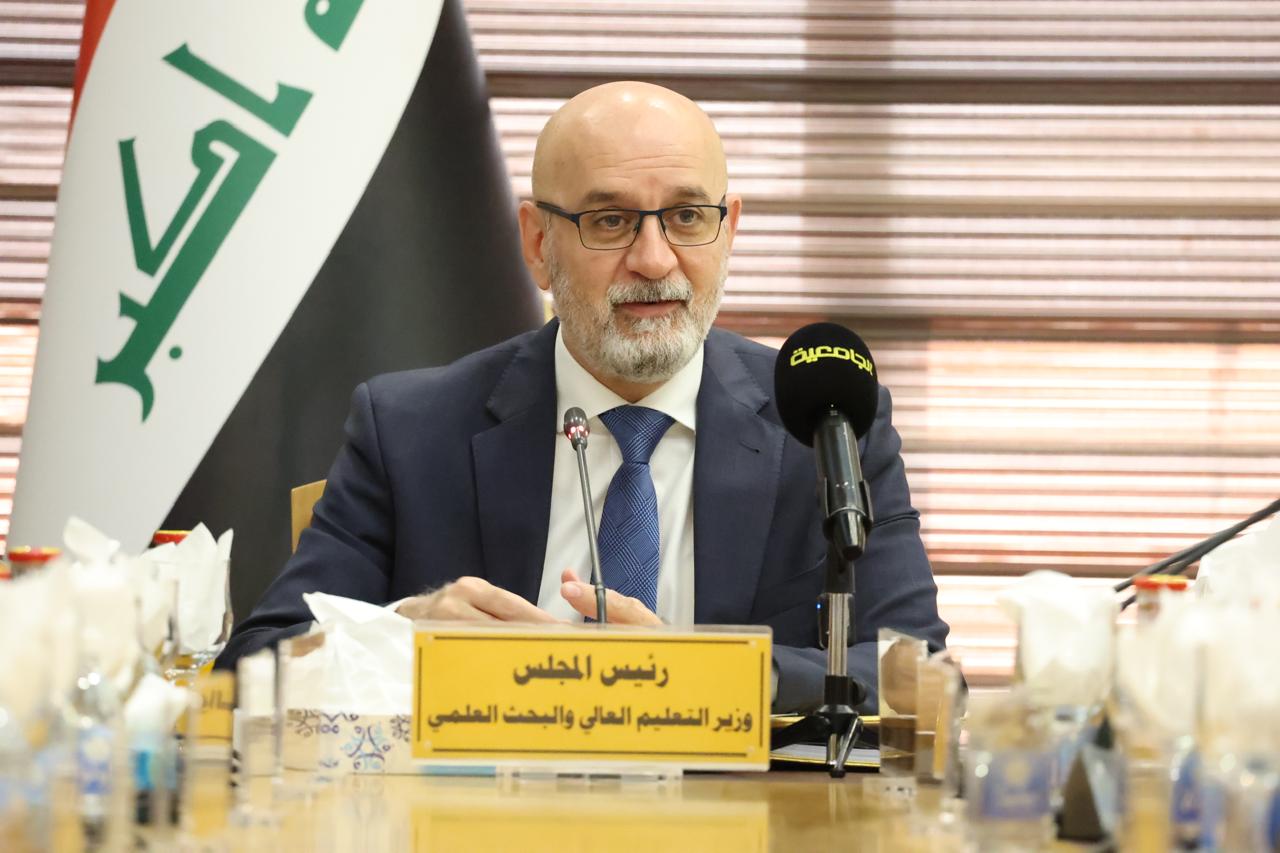
The Acting Minister of Higher Education and Scientific Research, Dr Hallo Al-Askari, chaired a meeting with the Advisory Board, attended by its members from the senior administrative leadership and the presidents of public universities.
At the outset of the meeting, the Minister stressed the importance of quality assurance and its direct impact on improving educational outcomes, keeping pace with global developments, strengthening academic reputation, and enhancing the production of scientific research and its presence in international indexes and databases.
The Minister also highlighted the role of quality in advancing governance, improving institutional performance, and responding effectively to the requirements of modern education, in addition to emphasising the completion of the standardised assessment examination.
For further information on the items approved by the Advisory Board, please visit the Ministry’s official website.
